Research to Policy – Resilience Study in Turkana County, Kenya

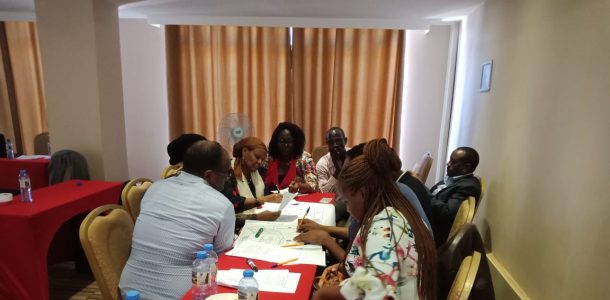
By Prof. Stephen Rwigi Small Research Project: Assessing Resilience of Drylands Communities to Shocks Associated with Rainfall Extremes Under Changing Climate and Landuse Conditions:  Case of Turkana County, Kenya Introduction Our approach was based on inclusion and involvement of the key stakeholders in the whole research process. The stakeholders included …

West Pokot Pastoralist Recent Climate Change adaptation strategies: Livestock Migration

By Dr. Namenya Daniel Naburi  BRECcIA Post Doc and Joseph Lolentum) August 2021 Climate change shocks has exposed pastoralists to loss of livelihood and infringement of children rights. Children are the main source of family labour during drought period such as the one experienced from May – October 2021. Many …

West Pokot Pastoralist Recent Climate Change adaptation strategies: Camel Rearing

By Dr. Namenya Daniel Naburi  BRECcIA Post Doc and Joseph Lolentum) August 2021 Camel rearing has become one of the most preferred adaptive strategies among the pastoralist community in West Pokot, this is after realizing that other livestock such as cattle and sheep are more vulnerable to climate change shocks …

More boreholes, less yield and more saline water

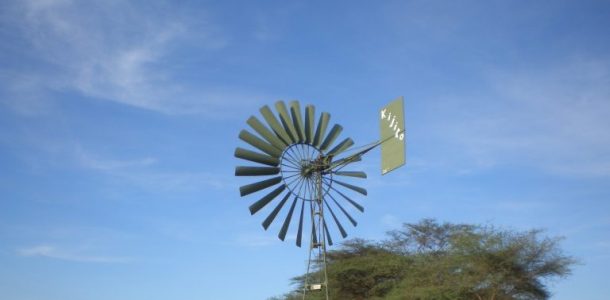
Joy Obando and Moses Muriuki The drylands support sparse settlements and agro-pastoralism which are the key factors that influence water development. In these environments, water is considered limited and intermittent. However, with the need to solve the challenges of water in these dryland environments, there is a tendency towards technical …

BRECcIA Summer School policy session 2020 – Nairobi, Kenya

By Fiona Ngarachu BRECcIA’s Kenya team organised virtual and face to face sessions under the BRECcIA 2020 hybrid policy summer school, as did our Malawian and Ghanaian counterparts. The Kenya summer school was organised with both face to face and virtual sessions, with virtual sessions covering issues around writing policy …

Developing participatory research skills in a dryland ecological restoration context:

Reflections from workshop participants and co-facilitators By Matt Kandel1, Nancy Kadenyi2, Janet Musyoka3, Fiona Ngarachu4 and Vallary Mutave5Ngila 1 Research Fellow in Environmental Anthropology, University of Southampton, 2 Environmental Project Associate, MetaMeta Research’,3 MSc student in Geography, Kenyatta University, 4 MSc student in Geography, Kenyatta University, 5Research Fellow, Kenyatta University From 16th-20thOctober Matt Kandel …

Building participatory research skills in northern Ghana: A field school approach

By Genevieve Agaba and Matt Kandel BRECcIA researchers from the University of Southampton and the University of Ghana recently held a participatory research skills training workshop for the benefit of early career researchers and development/agricultural extension staff in the Upper East Region of northern Ghana.  The workshop took place over a four-day …

Reflections on the BRACEDx multi stakeholder workshop

By: Fiona Ngarachu, Moses Muriuki[1], Claire Bedelian The BRACEDx (Building Resilience and Adaptation to Climate Extremes and Disasters) project, held a multi-stakeholder workshop on the 21stof May 2019 at the ICT hall in Wajir County, Kenya. This workshop served as an end of project meeting to present the work that …
BRECcIA Training Workshop Enhances Collaborative Research among Early Career Researchers across the Globe

By: Eunice Shame-LEADSEA BRECcIA organised a two weeks training workshop which mobilised 23 Early Career Researchers (ECRs) of different disciplines across the globe. The workshop which took place from 3rdto 15thMarch was patronised by BRECcIA multidisciplinary ECRs team with overlapping interests in water and food security from US, UK, Kenya, …

BRECcIA defines dry lands in Malawi, Ghana and Kenya with Stakeholders

Institutions in Africa and UK implementing a project called Building Research Capacity for Sustainable Water and Food Security in Sub-Saharan Africa (BRECcIA) LEAD SEA and IIED are the impact partners in the consortium and take lead in stakeholder engagement to co-design the BRECcIA project with stakeholders in Africa. The first …

Reflecting on BRECcIA’s Kenya stakeholder workshop:

Developing cross-scale synergies will be critical for addressing climate change and water security in the drylands By Fiona Ngarachu, Christine Magaju* and Matt Kandel On 17 January 2019 BRECcIA held a workshop with stakeholders from the Arid and Semi-Arid Land (ASAL) counties of Kenya in Machakos Town. The stakeholders included representatives …

Unlocking the Potential of Kenyan ASALs for Accelerated National Development

By Chris Shisanya, Kenyatta University The ASALs make up to 89% of the Kenya with approximately 38% Kenya’s Population. This region is home to more than 90% of the wildlife game that supports the tourism industry and contributes 12% of Kenya’s GDP. It hosts 70% of the national livestock herd …